
1. How the Penis is Built and Where Surgery Takes Place
Before you look at surgery options, it helps to know how the penis is built inside. Think of the penis shaft as a structure made of flexible layers wrapped around three fluid tubes. Two upper tubes fill up with blood during erections to make the shaft hard, while a smaller bottom tube carries urine and semen. Surrounding all three tubes are two key protective wrappers under your skin. The outer wrapper is a soft, elastic tissue layer called the Dartos layer. Beneath it sits a stronger, tighter protective coat named Buck’s fascia.
The main nerves that give you feeling run right on top of the hard erection tubes, directly under Buck’s fascia. When a doctor performs girth enlargement surgery, they do not cut into or go inside the blood tubes that cause your erection. Instead, they carefully slip the material into the space right between the soft outer Dartos layer and the firm inner Buck’s fascia coat. This positioning adds thickness around the outside of the shaft while leaving your internal blood chambers untouched.
Visual Infographic: Penile Shaft Layers (From Outer Skin to Inner Core)
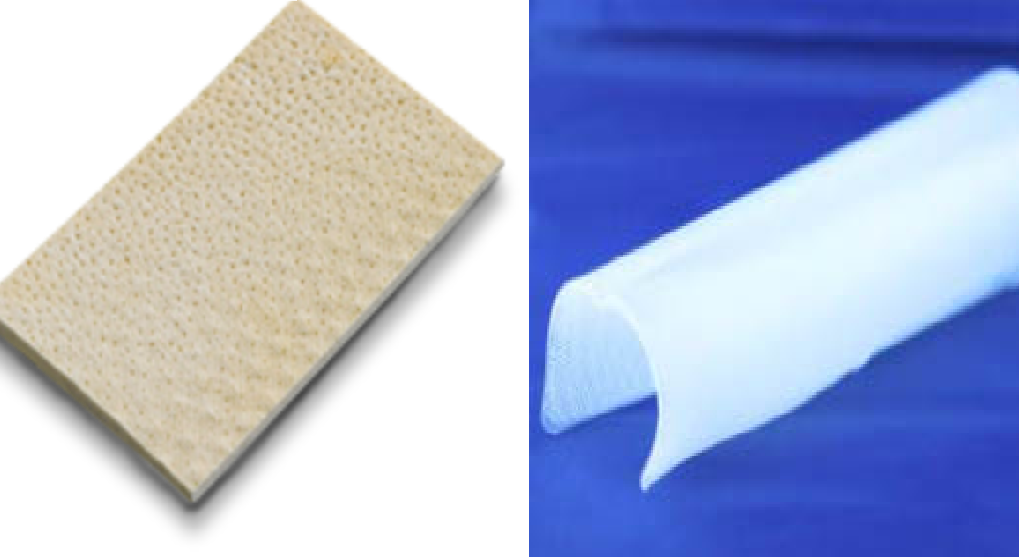
Because both types of procedures place materials in this exact same pocket above Buck’s fascia, the main difference comes down to how your body handles the material over time. One option uses a processed donor tissue matrix that melts into your body like a real sponge, while the other uses a solid pre-made silicone sleeve that stays a separate artificial piece forever.
Sub-section 1.1: How the Doctor Reaches the Surgery Area
To place a human tissue graft (called an Acellular Dermal Matrix or ADM), the surgeon usually makes a circular cut just under the head of the penis or a small incision near the pubic area. They lift the skin back gently to create a clean, safe path over Buck's fascia.
For a soft silicone implant, the surgeon usually makes a small cut just above the base of the penis near the pubic bone. They slide the flexible silicone sleeve over the top and sides of the shaft, fixing it securely near the pubic arch so it cannot move out of place.
Quick Visual: Surgical Entry Points Compared
Circumferential cut under glans or small pubic cut. Wraps completely around the whole shaft.
Small cut above base near pubic bone. Wraps top and sides, leaving bottom open.

Understanding your anatomical layers helps you set clear and safe expectations for penile surgery.
2. How Your Body Reacts to Grafts vs. Silicone Over Time
Once an item is placed inside your body, your immune system reacts immediately. Human tissue grafts and silicone implants trigger completely different healing reactions. A human tissue graft is made from donor skin that has been cleaned of all foreign cells, leaving only a natural protein mesh. Because it looks like natural collagen, your body treats it like an open scaffold waiting to be lived in.
During the first few days after tissue graft surgery, the graft drinks in fluids and nutrients from surrounding tissues. Over the next month, your body grows tiny new blood vessels and living cells straight into the graft holes. Within six to twelve months, your body fully adopts the graft, replacing donor material with your own natural tissue. However, because it is a natural biological material, your body may absorb roughly 10% to 20% of its initial thickness over time.
Visual Infographic: Healing Timeline Comparison
Graft: Absorbs nutrient fluid like a dry sponge.
Silicone: Triggers instant swelling and fluid buildup around rubber.
Graft: Tiny blood capillaries grow deep inside the matrix.
Silicone: Body wraps a tough scar wall (capsule) around it.
Graft: Turns into real living tissue. May lose 10-20% volume.
Silicone: Keeps exact shape, but scar capsule may squeeze or bend.
In sharp contrast, a solid silicone implant is an artificial synthetic material. Your body cannot grow blood vessels or cells inside solid rubber. Instead, your immune system recognizes it as a permanent foreign object. To protect you, your body builds a thick wall of dense scar tissue around the silicone sleeve, sealing it off in a tight private pocket.
Sub-section 2.1: Human Tissue Graft (ADM) Healing Characteristics
Because human tissue grafts merge directly with your penis tissues, the final result feels soft, natural, and warm. Once blood vessels fill the graft, your body treats it like regular skin layer. If a minor skin infection happens later in life, your immune system can send white blood cells through those new blood vessels to fight off germs naturally.
Sub-section 2.2: Solid Silicone Capsule and Scar Contracture
Because silicone cannot absorb blood vessels, it retains its exact size without shrinking. However, the scar wall that surrounds it can sometimes tighten months or years later. This squeeze is called capsular contracture. If the scar wall tightens too hard, it can pull on the shaft, bend the penis during erections, or push the implant out of place.
Visual Summary: Natural Integration vs. Scar Encapsulation
Full vessel growth • Soft and natural touch • Small risk of partial absorption over time.
Isolated by scar wall • Unchanging size • Risk of scar wall shrinking or curving shaft.

Biological grafts blend naturally into host tissue, whereas synthetic materials remain enclosed in scar capsules.
3. Effects on Feeling, Nerves, and Finishing Speed
Sexual feeling in the penis comes from tiny nerve branches that travel from the main nerve trunk under Buck’s fascia up to the surface skin. Any layer placed between the skin and main nerves changes how touch felt on the outside reaches those nerves underneath. Neither procedure cuts the main nerve trunks, but each affects touch perception in completely different ways.
When a human tissue graft is placed, it acts like a soft, thick cushion over the nerve branches. When your partner touches or rubs the shaft, the extra tissue layer absorbs part of the rubbing force. This dampens extreme surface sharpness without deadening your nerves. Over six to twenty-four months, tiny nerve endings slowly sprout into the graft, giving you smooth, comfortable, natural sensation.
Visual Infographic: How Touch Signals Travel to Your Nerves
Touch on skin ➔ Cushion layer softens sharpness ➔ Mild signal reaches nerve ➔ Helps you last longer in bed!
Touch on skin ➔ Rubber sleeve resists pressure ➔ Hard erection pushes nerve against rubber ➔ Potential temporary numbness.
Because human tissue grafts soften overly sharp skin touch, they offer a surprise benefit for men who suffer from fast finishing (premature ejaculation). By taking off the harsh edge of touch sensation, the graft helps men hold back climax longer. Clinical tests show that men who finished in under 1 minute before surgery were able to last between 3 to 7 minutes after getting a tissue graft.
Sub-section 3.1: Premature Ejaculation Improvement with Tissue Grafts
If overly sensitive penis skin causes you to finish sex too quickly, a human tissue graft serves two purposes at once: it increases shaft girth and acts as a natural sensory barrier. Doctors also offer micro-injections of powdered tissue graft combined with healing factors to reduce over-sensitivity without needing open surgery.
Sub-section 3.2: Numbness and Pressure Risks with Silicone Implants
A silicone implant cannot grow nerve fibers. When your penis becomes fully hard during an erection, the expanding internal blood chambers press outward against the firm inner wall of the silicone sleeve. This pinches the main sensory nerves against the hard rubber. About 5% to 15% of men report temporary numbness or tingling on the shaft or head during recovery until tissue swelling goes down completely.

Sensory feedback changes naturally based on whether the material cushions or compresses surrounding nerves.
4. Erection Quality, Hardness, and Healing Pulling Sensations
A common fear among men considering girth surgery is losing their ability to get a hard erection. It is reassuring to know that neither tissue grafts nor silicone sleeves touch the deep internal arteries or blood chambers responsible for erections. As long as your surgery goes smoothly without deep infection or severe scarring, your natural ability to get hard remains unchanged.
However, getting hard causes your penis shaft to expand in both length and width. During the early healing stages, the new material around your shaft must stretch to accommodate that expansion. This temporary stiffness creates different physical feelings during erections depending on which material you choose.
Visual Infographic: Erection Expansion vs. Material Elasticity
- Months 1 to 3: Graft is stiffer than expanding penis.
- Causes tight "pulling" feeling during erection.
- Months 3 to 12: Graft softens and pulling stops completely.
- Months 1 to 6: Feels smooth and painless initially.
- Years later: If scar wall shrinks, it pulls hard.
- Can cause upward bending or visible shortening.
With human tissue grafts, up to 30% of men experience a tight pulling feeling along the shaft during erections during the first 3 to 6 months. Doctors call this "erectile traction." It happens because the fresh graft is less stretchy than your expanding erection chambers. As your body remodels the graft over 3 to 12 months, the new tissue softens, becoming elastic like natural skin, and the tight pulling sensation vanishes completely.
Sub-section 4.1: Why "Erectile Traction" Happens and How It Resolves
Do not panic if erections feel tight or slightly uncomfortable during the first few months after getting a human tissue graft. This pulling is a normal sign that your body is active in tissue rebuilding. Once the remodeling phase finishes, erectile satisfaction scores increase significantly because men feel much more confident in their appearance without long-term pain.
Sub-section 4.2: Late-Stage Curvature and Shortening Risks with Silicone
While silicone implants feel comfortable right after surgery, problems can arise years later if severe scar tightening occurs. Studies reviewing troubled silicone cases show that up to 69% developed severe upward penile bending during erection, and 62% suffered visible penile shortening because the tight scar band tethered the shaft backwards toward the pubic bone.
Biomechanical elasticity normalizes over time with tissue grafts, whereas silicone scar tissues require long-term monitoring.
5. Side Effects, Complications, and What Happens If Problems Occur
All surgeries carry risks like infection, bleeding, fluid buildup under the skin, or slow wound healing. Because human tissue grafts and silicone sleeves interact with your body in opposite ways, their complications and removal steps are also completely different. Choosing a procedure means weighing size gains against potential revision risks.
Visual Infographic: Complete Feature Comparison Table
| Feature / Risk | Tissue Graft (ADM) | Silicone Sleeve |
|---|---|---|
| Flaccid Girth Gain | +0.6 to +3 inches | +1.5 to +3 inches |
| Erect Girth Gain | +0.6 to +3 inches | +1.5 to +3 inches |
| Infection Rate | Around 5% | 1% to 3% |
| Fluid / Blood Buildup | Around 2% hematoma risk | 2% to 5% seroma risk |
| Erection Pull / Pain | Early pull (30%), resolves in 3 months | Low early pain, risk of late scar bend |
| Removal Rate | Around 9% | 3% to 10% |
| Removal Complexity | High (Integrated, requires careful cleanup) | Moderate (Slips out, but scar must be cut) |
Silicone implants give larger immediate flaccid size increases, often adding over 1.5 inches in thickness when flaccid. However, because silicone is a solid synthetic piece, an infection cannot be treated with antibiotics alone. If bacteria form a slimy shield (biofilm) on the smooth rubber, the doctor must remove the implant completely to clear the infection.
Sub-section 5.1: How Surgeons Fix Complications and Remove Materials
If a human tissue graft suffers a severe infection or skin healing failure, taking it out is complex. Because your body has already grown blood vessels and living tissue deep into the graft scaffold, the surgeon cannot simply pull it out in one piece. They must carefully scrape away the infected tissue and sometimes transfer healthy skin from the scrotum to cover and protect underlying nerves.
If a silicone sleeve must be removed, the rubber piece slips out of its pocket easily. However, taking out the rubber alone is not enough if the scar capsule has hardened. The surgeon must also cut away the entire thick scar capsule (capsulectomy). If the surgeon leaves the hard scar wall behind, it will contract as it heals, causing permanent penis retraction and severe shortening.

Discussing revision steps with a board-certified surgeon ensures you are prepared for all potential outcomes.
6. How to Choose the Right Option for Your Goals
Choosing between a human tissue graft and a silicone implant comes down to balancing your personal goals against risk tolerance. If your primary goal is a natural-feeling increase in girth, natural tissue integration, and help with lasting longer in bed, a human tissue graft (ADM) is usually the preferred option. You may be willing to accept temporary pulling sensations during early erections while the graft heals into living tissue.
Visual Infographic: Patient Decision Flowchart
- You want a soft, 100% natural feel and touch.
- You want your body to grow blood vessels into it.
- You finish sex quickly and want to last longer.
- You want guaranteed permanent material volume.
- You do not mind having a synthetic rubber piece.
- You accept risks of scar tightening or late removal.
Before making any surgical decision, always consult a qualified, board-certified urologist or plastic surgeon. Make sure to complete psychological evaluations to confirm your expectations are realistic. Understanding these facts empowers you to make a safe, confident decision for your body, health, and peace of mind.
Take time to weigh all biological factors before deciding on your preferred surgical pathway.


