
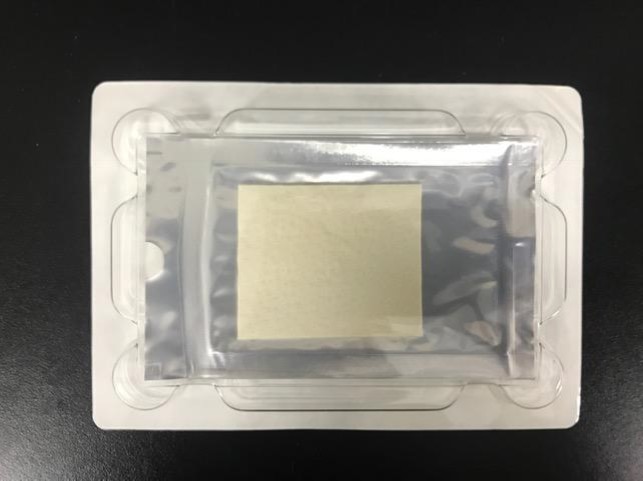
The Magic Biological Tissue Sheet (ADM)
When a man wants to make his penis wider, surgeons often use a highly advanced, soft sheet of biological tissue called an Acellular Dermal Matrix (ADM). Think of ADM as a clean, empty building frame made from real skin, which can come from humans or animals. Before it can be placed safely inside you, scientists wash it in a laboratory to remove all living cells. This leaves behind only a pure, strong, and flexible net of collagen fibers.
Removing every original cell is the most important safety step. If any donor cells or genetic materials were left on the sheet, your body’s immune system would recognize them as dangerous invaders and launch a massive attack. This would cause severe pain, swelling, skin damage, and implant rejection. Because of this, safety rules state that every milligram of dry tissue must contain less than 50 nanograms of donor DNA.
Step-by-Step Clean: How ADM is Made
1. Raw Skin
Contains original cells and genetic debris.
2. Deep Wash
Removes and flushes donor DNA completely.
➜ ➜3. Pure Frame
Safe biological scaffolding remains.
To meet these safety targets, labs use freeze-thaw physical methods. Freezing grows sharp ice crystals that pop cell walls like balloons, releasing inner materials. While this keeps the collagen frame strong, it does not wash away leftover debris. Freezing alone leaves behind up to 88% of the donor's DNA, requiring secondary chemical washes.
Chemical cleaners are the most popular choice for completing this wash. Labs use mild acids, bases, and gentle soaps called detergents to break down cell walls. Mild acids clean thin tissues, while bases help remove fat from thicker skin. However, if the tissue stays in chemicals too long, the collagen fibers can break down, making the sheet stiff and easy to tear.
Cleaning Methods Comparison
Highly natural process but leaves behind high DNA debris.
Removes DNA completely but can reduce elasticity if overexposed.
Other Forms of Biological Grafts
While skin sheets are the primary choice for widening tissues, scientists also clean other materials using similar methods. For example, in the study paper named "Global Acellular Dermal Matrix Research Plan.pdf", researchers discuss how cleaned tooth dentin is used to rebuild jawbones. Just like skin, dentin goes through pulp removal, acid washing, and freeze-drying to prevent rejection.
Rebuilds hard bones with a shelf life of five years.
Widens soft tissues and integrates within twelve weeks.

Popular Brand Names and Choices
If you decide to go ahead with girth surgery, your doctor will talk to you about different brands of tissue sheets. The most popular names on the market are AlloDerm, Dermacell, and MegaDerm, which are made from human donor skin, . Each brand has its own unique cleaning steps, safety levels, and preparation times in the operating room. Understanding these differences can help you feel more confident about your surgery and your recovery.
MegaDerm is a famous brand made from human skin, particularly in Korea. In the past, surgeons had to spend precious time in the operating room soaking the dry sheet in sterile water to make it soft again. Today, the company sells a version called MegaDerm Ready-to-Use (RTU). This pre-hydrated sheet does not need to be refrigerated or soaked, saving time during your procedure. MegaDerm RTU is cleaned using mild soaps and enzymes to remove donor cells and is sterilized to the older aseptic standard.
Brand Comparison Guide
Uses human skin with an aseptic standard. Requires zero preparation time before surgery.
Uses human skin with a terminal sterile standard. Ready to use immediately.
Uses pre-hydrated human skin with a terminal sterile standard. Lower risk of skin issues.

What Happens to the Graft Over Time?
Once the biological sheet is surgically inserted under your skin, your body immediately starts a natural healing process called remodeling. During the first two weeks, you might notice some mild swelling and fluid buildup, which is a completely normal reaction to surgery. By the fourth week, your body starts building new, tiny blood vessels and moving its own cells into the empty collagen frame. By the eighth week, a soft protective capsule forms around the sheet, and by the twelfth week, the matrix is fully integrated into your body, packed with organized collagen fibers that feel exactly like your natural tissues.
Unlike other options, these biological tissue sheets offer incredible long-term stability and thickness. Studies show that a high-quality human ADM sheet retains about 94.5% of its original thickness even after twelve months. It does not slowly dissolve or disappear over time, which is a major advantage. This makes biological sheets much more reliable than other common treatments. For instance, temporary dermal fillers are easily absorbed by the body and require regular injections, while autologous fat transfers often melt away unevenly, leaving behind a bumpy and asymmetric shape.
Healing & Integration Timeline
Mild swelling as the body accepts the graft.
Early cell infiltration and new capillary growth.
Advanced microvascular network and fibroblast proliferation.
Fully integrated tissue resembling natural skin.
These biological sheets also compare very favorably to synthetic implants, which is a pre-shaped silicone sleeve. While silicone offers a permanent size increase, it is an artificial plastic that never integrates with your body, Biological grafts become a real, living part of your body, providing a safe, soft, and completely natural-feeling enhancement.
Girth Treatment Comparison
Offers natural integration, permanent results, and low complication risks.
Provides artificial shape with no tissue integration.
Has unpredictable volume loss and potential for bumpy contours.